Generally speaking, the term “industrial dryers” applies to any machine that removes liquid or moisture from bulk materials. Industrial dryers are much larger than the average domestic dryer and are not to be confused with at-home laundry dryers or industrial hand dryers. Read More…
Dürr CTS Inc. is a leading global supplier of environmental solutions and engineered products tailored to meet customers' industrial process requirements. We offer a complete portfolio of air pollution control technologies and drying and curing systems, including industrial dryers and ovens for roll-to-roll processes, web forming processes and conveyor handling of webs, as well as specialized...

At Akona Process Solutions, we are dedicated to engineering advanced industrial dryers that meet the rigorous demands of modern manufacturing and processing industries. We design and build drying systems that deliver precision, consistency, and efficiency, helping our clients achieve optimal production quality and throughput.

At ANDRITZ Separation Inc., we support industries around the world by delivering high-performance drying solutions that optimize efficiency, consistency, and product quality. We design and manufacture advanced dryers engineered to handle everything from fine chemical powders to food ingredients, minerals, and biomass, and we take pride in building systems that perform reliably under the most...


More Industrial Dryer Manufacturers
Applications
Industrial dryers play a critical role in a wide range of sectors, including water treatment, air and pollution control, food processing, paper and pulp production, agriculture, pharmaceuticals, plastics manufacturing, chemical processing, textile production, and other industrial manufacturing environments. These advanced drying machines are indispensable for reducing moisture content in products and materials such as refuse, sludge, dairy products, grain, paper, plastics, fertilizer, chemicals, and even biomass. By delivering consistent and energy-efficient drying, industrial dryers help manufacturers meet strict regulatory requirements, improve product quality, extend shelf life, and reduce shipping costs. Unlike the large dryers found in laundromats or hotels, industrial dryers are engineered for bulk material processing and are not typically used for consumer laundry purposes.
- Water treatment: Dryers such as sludge dryers and biosolids dryers are vital for reducing the volume and weight of wastewater residuals, enabling cost-effective disposal or repurposing for agricultural use.
- Food processing: Industrial dryers, including spray dryers and freeze dryers, are essential for producing powdered milk, instant coffee, dehydrated fruits and vegetables, and more.
- Pharmaceuticals: Tray dryers and vacuum dryers ensure safe, contaminant-free drying of temperature-sensitive compounds and APIs.
- Plastics and chemicals: Rotary dryers and fluid bed dryers remove moisture from resins and powders, improving downstream processing and product performance.
- Paper and pulp: Infrared and convection dryers are used for continuous drying of paper sheets and pulp, enhancing production efficiency and paper quality.
Are you looking to improve drying efficiency in your production line or seeking the best industrial dryer solution for a specific application? Jump to key decision factors or explore different dryer types and their use cases below.
History
For thousands of years, humans have practiced various drying techniques—such as sun drying, wind drying, freeze drying, smoking, and burying in sand—to preserve food and textiles. These ancient methods were foundational for ensuring food security and longevity long before industrialization. The mechanical drying revolution began in the early 18th century, when French inventors Chollet and Masson introduced a method of passing pressed vegetable pulp through a heated tunnel at 105℉, creating early dried rations for military use.
Later, American innovators such as C.W. Post and W.K. Kellogg transformed the food industry by developing oven-dried cereal flakes, setting the stage for mass-produced, shelf-stable convenience foods. The rise of processed and packaged foods in the 20th century further accelerated the adoption of industrial drying equipment within commercial food facilities, reinforcing the critical role dryers play in modern food technology.

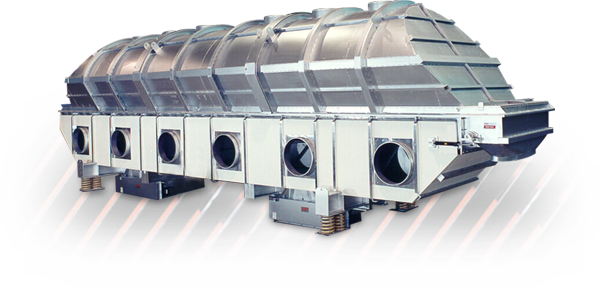
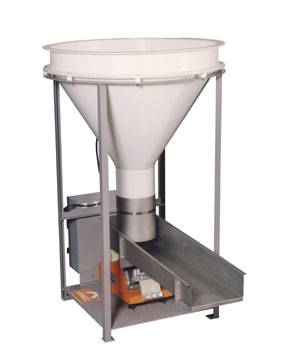
Dryers – Carrier Vibrating Equipment, Inc.
The evolution continued in 1833 when American salt miners adopted mechanical evaporation to purify brine, first using open pans, then closed vacuum pans, and eventually wood-burning salt evaporators, significantly boosting salt quality and production efficiency. The invention of the first mechanical clothes dryer by M. Pochon in 1799, and subsequent improvements such as George Sampson’s perforated drying rack and J. Ross Moore’s electric tumble dryer, exemplifies the ongoing innovation in drying technology.
World War II marked another leap forward, with scientists leveraging freeze-drying to preserve biological materials like blood plasma and penicillin, ensuring sterile supplies for field hospitals. As new materials and industries emerged, industrial dryer designs evolved to incorporate stainless steel parts, advanced control systems, and modular components, making them increasingly efficient, reliable, and adaptable to new industrial challenges.
How Industrial Dryers Work
At the core, industrial dryers operate by accelerating the removal of moisture through evaporation—converting liquid water to vapor—or via sublimation in the case of freeze dryers, where ice transitions directly to vapor without passing through a liquid phase. This is achieved by applying heat, reducing humidity, increasing air flow, and sometimes lowering pressure within a controlled environment.
Three principal drying methods are widely used in industrial settings:
- Air drying: The most prevalent method, using heated or ambient air circulated over or through the material. Equipment such as fluid bed dryers, rotary dryers, flash dryers, and freeze dryers utilize this technique.
- Spray drying: Involves atomizing liquid material into a fine mist within a chamber of hot air or steam, instantly drying droplets into powder. Commonly used for milk powder, chemicals, and pharmaceuticals.
- Infrared drying: Uses infrared radiation to directly heat and evaporate moisture from materials, ensuring even drying without overheating surfaces.
Want to learn how different types of industrial dryers enhance product quality and streamline production? Explore our detailed dryer types and their key benefits.
Types of Industrial Dryers
Choosing the right type of industrial dryer is essential for optimizing performance, energy efficiency, and product quality. Below is an in-depth overview of prominent dryer technologies and their ideal applications:
Fluidized Bed Dryers (FBDs): These dryers use a stream of heated gas or air to suspend and agitate particles, creating a fluid-like state. This ensures uniform heat transfer and efficient moisture removal, making FBDs perfect for pharmaceutical powders, ceramics, food grains, and chemicals.
Conduction Dryers: Utilizing direct contact with heated surfaces, conduction dryers (such as drum dryers or vacuum tray dryers) excel at evaporating moisture from thin films, slurries, and wet pastes. They are favored in food processing and specialty chemical industries.
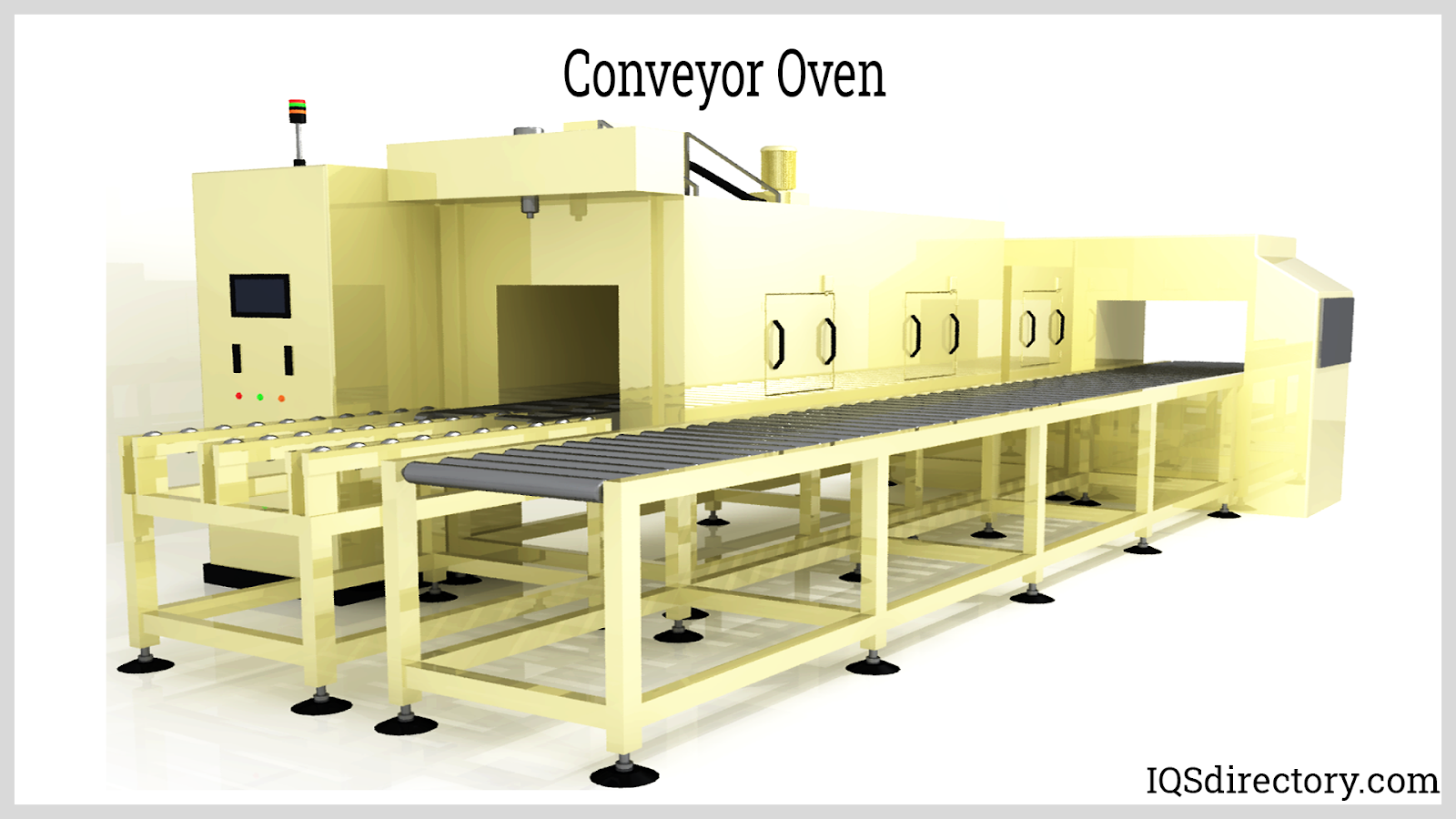
Convection Dryers: These dryers, similar to industrial ovens, blow temperature-controlled heated air across or through the product. Convection drying is versatile, suitable for textiles, paper sheets, ceramics, and bulk solids.
Rotary Dryers (Drum Dryers): Featuring large rotating drums, these robust machines are ideal for handling bulk solids—from mineral ores and sands to fertilizers and organic sludge. Their tumbling action ensures consistent drying and gentle handling of fragile materials.
Flash Dryers: By conveying wet material through a heated air stream in a flash, these dryers provide rapid moisture removal for fine powders, chemicals, and minerals. Flash dryers are valued for their high throughput and compact footprint.
Freeze Dryers (Lyophilizers): Essential in pharmaceutical, biotech, and food industries, freeze dryers preserve sensitive products by freezing them and sublimating the ice under vacuum. This yields lightweight, shelf-stable products—key for vaccines, biological samples, and instant foods.
Spray Dryers: Used extensively in food, dairy, and chemical manufacturing, spray dryers transform liquid solutions or suspensions into fine powders. The process is highly customizable, allowing manufacturers to control particle size, moisture content, and product flowability.
Infrared Dryers: Leveraging the penetrating heat of infrared waves, these dryers enable fast, energy-efficient drying of coatings, inks, textiles, and paper without excessive surface heating. Their adaptability makes them a go-to choice for conveyorized or batch drying.
Tray Dryers (Vacuum Dryers): Designed for high-value, temperature- or oxygen-sensitive materials, tray dryers are widely used for pharmaceuticals, chemicals, and food products. The vacuum environment lowers the boiling point, enabling gentle and complete drying.
Steam Tube Dryers: A modified rotary dryer, these incorporate internal steam-carrying tubes to boost heat transfer efficiency—perfect for applications requiring indirect heating, such as fertilizer granules and chemicals.
Specialized Dryer Types:
- Sludge Dryers: Reduce the water content of industrial sludge, minimizing disposal costs and enabling safe landfill or waste-to-energy conversion.
- Biosolids Dryers: Transform municipal sewage waste into usable biosolids or fertilizer, supporting circular economy initiatives in agriculture.
- Suspension/Paste Dryers: Fluid-bed or paddle dryers customized for sticky, viscous materials such as filter cakes, pastes, and dispersions.
- Dispersion Dryers: Efficiently dry slurries and wet cakes, improving process speed and consistency in chemical and mineral processing.
Not sure which dryer fits your material or process? See our guide to choosing the right industrial dryer by industry and material type.
Equipment Components
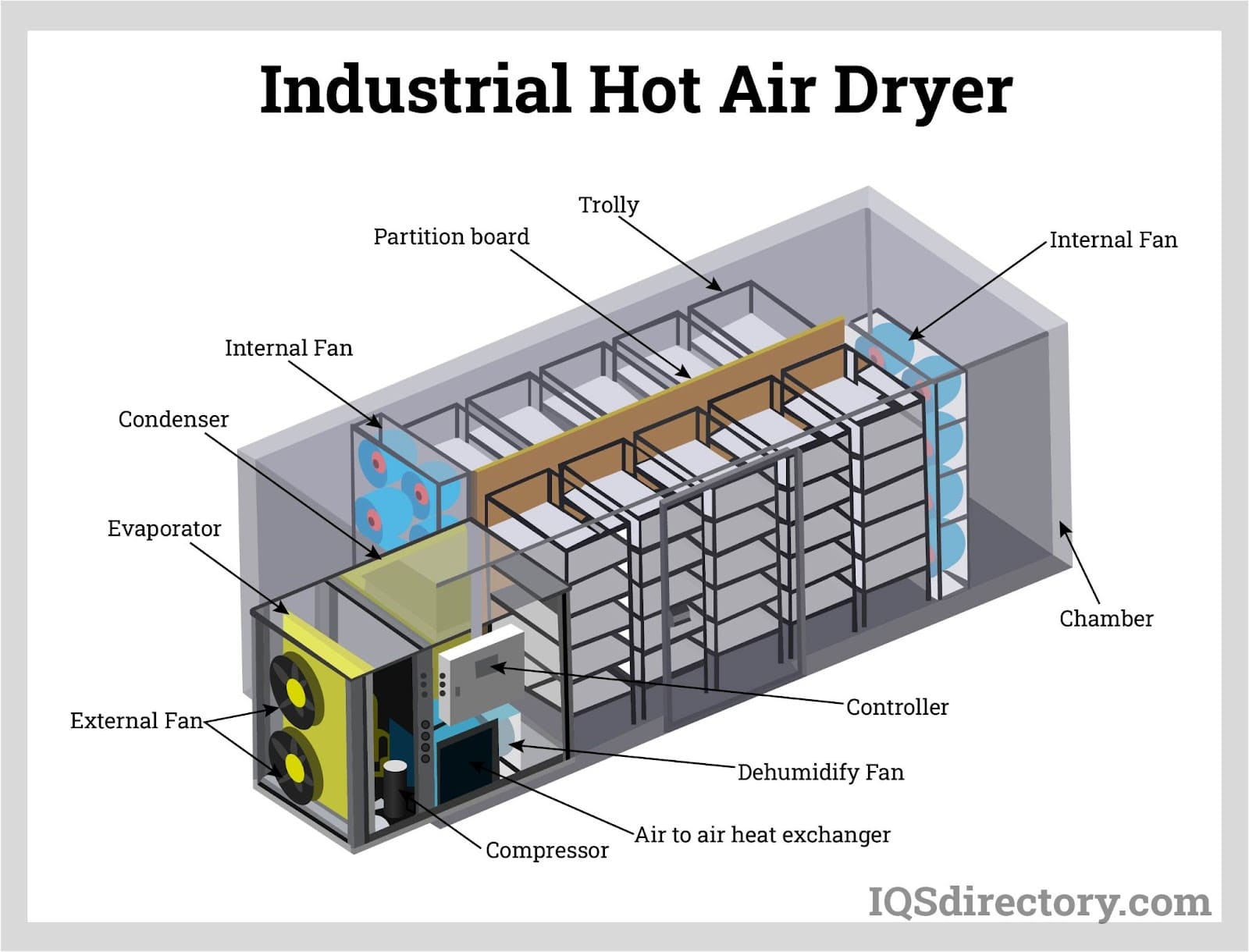
While each industrial dryer is engineered for specific duties, most share foundational components for reliable, safe, and efficient operation:
- Stainless steel chambers or drums: Corrosion-resistant housings for durability and sanitary processing.
- Gauges and sensors: For precise monitoring of temperature, pressure, humidity, and air flow.
- Intake and exhaust valves: Manage air or gas flow to optimize drying rates and energy usage.
- Access doors and observation ports: Enable inspection, cleaning, and maintenance.
- Automation and control panels: Digital or analog panels for process control, including programmable logic controllers (PLCs) and safety interlocks.
- Conveyor systems or feed hoppers: In continuous dryers, these components move materials steadily through the drying chamber for consistent results.
Advanced dryers may also feature explosion-proof design, HEPA filtration, heat recovery systems, and integrated dust collection to meet industry-specific regulations and operational requirements.
Design and Customization
Industrial dryer manufacturers collaborate closely with clients to build custom drying solutions tailored to unique process demands. Key design considerations include:
- Continuous vs. batch operation: High-volume production lines often benefit from continuous dryers, while batch dryers offer flexibility for smaller runs or specialty products.
- Material properties: Particle size, moisture content, heat sensitivity, and flow characteristics inform dryer selection and sizing.
- Capacity: Drying rate (in lbs/hr or metric tons/hr), chamber volume, and product throughput must match your production scale.
- Energy efficiency: Heat recovery, insulation, and airflow optimization can reduce operating costs and environmental impact.
- Automation level: Integration with sensors, PLCs, and data reporting can streamline operations and improve consistency.
- Fabrication methods: Welded vs. bolted construction, sanitary finishes, and modular assembly options are chosen based on application and maintenance needs.
- Integration: Many dryers are custom-built to work seamlessly with upstream and downstream equipment, such as washers, conveyors, mixers, or packaging lines.
Wondering how to specify the ideal industrial dryer for your facility? Read our checklist of must-have features and customization options or contact a manufacturer for expert advice.
Benefits of Industrial Dryers
Investing in an industrial dryer offers numerous advantages for manufacturers and processors:
- Increased productivity: Automated drying systems accelerate processing times and enable higher production throughput, reducing bottlenecks.
- Consistent product quality: Advanced controls ensure uniform moisture content, color, and texture, supporting regulatory compliance and customer satisfaction.
- Cost savings: Efficient drying reduces labor, energy consumption, and waste management expenses.
- Improved safety: Modern dryers minimize exposure to hazardous materials and incorporate features to mitigate explosion and fire risks.
- Versatility: With multiple dryer types and configurations, manufacturers can process a wide range of products—from delicate pharmaceuticals to abrasive minerals—with one or more tailored systems.
- Environmental compliance: Enhanced emission controls, heat recovery, and water reclamation systems help facilities meet environmental standards and corporate sustainability goals.
Looking to reduce operational costs or meet strict quality standards? Discover how the right industrial dryer can transform your business.
Key Decision Factors for Selecting an Industrial Dryer
Choosing the right dryer technology is crucial for process efficiency, product quality, and total cost of ownership. When evaluating industrial dryers, consider the following factors:
- Material compatibility: Does the dryer support your raw material’s physical and chemical properties?
- Capacity and scalability: Can the system handle your current output while allowing for future growth?
- Moisture removal rate: Is the dryer fast enough to meet your cycle times?
- Energy and operational efficiency: What are the expected running costs and environmental impact?
- Footprint and facility layout: Will the dryer fit seamlessly into your production space?
- Maintenance and reliability: How easy is it to service, clean, and maintain the equipment?
- Compliance and certifications: Does the system meet industry-specific safety and hygiene standards (e.g., FDA, cGMP, ATEX)?
- Integration: Can the dryer be automated or connected to your plant’s control systems?
- Budget: Does the total cost—purchase, installation, operation, and maintenance—fit your financial plan?
Have a specific material or process challenge? Ask our experts for a custom dryer recommendation.
Safety and Compliance Standards
Ensuring the safe and efficient operation of industrial dryers requires compliance with stringent regulations:
- Energy efficiency: All dryers must meet Department of Energy (DOE) standards to minimize waste and reduce operating costs.
- Occupational safety: OSHA guidelines mandate robust safety features, including emergency shutoffs, explosion-proof components, and proper ventilation.
- Industry-specific certifications: Depending on your sector, compliance with FDA, cGMP, ATEX, or CE standards may be required for sanitary or hazardous environments.
- Environmental regulations: Air emissions, dust collection, and wastewater management must align with EPA and local environmental laws.
Finding the Right Industrial Dryer Manufacturer
Partnering with the right industrial dryer manufacturer is essential for securing a solution that meets your specific needs, budget, and timeline. A reputable supplier will:
- Assess your requirements in detail and recommend the optimal dryer type and configuration.
- Offer custom engineering, fabrication, and automation tailored to your facility.
- Ensure on-time delivery and, if needed, manage installation and commissioning.
- Provide ongoing maintenance, parts, and technical support to maximize your dryer’s lifespan.
- Demonstrate experience in your industry, with a proven track record of reliable installations and satisfied clients.
Ready to take the next step? Browse our curated list of trusted industrial dryer manufacturers or request a quote for your project.
Frequently Asked Questions about Industrial Dryers
- What type of industrial dryer is best for my application? The right dryer depends on your material, desired moisture content, throughput, and energy requirements. Use our decision factors checklist or consult a manufacturer for personalized advice.
- How do industrial dryers reduce costs in my operation? By automating moisture removal, minimizing manual labor, improving product quality, and lowering waste disposal fees, industrial dryers deliver rapid ROI.
- Can industrial dryers be customized for hazardous or sanitary environments? Yes—manufacturers offer explosion-proof designs, sanitary finishes, and modular configurations for food, pharmaceutical, or chemical processing.
- What maintenance is required for industrial dryers? Routine cleaning, inspection of wear parts, calibration of sensors, and periodic safety checks ensure reliable performance and compliance.
Start Your Industrial Dryer Project
Whether you’re upgrading existing equipment, scaling production, or launching a new facility, selecting the right industrial drying solution is crucial for achieving operational excellence. Explore our comprehensive resources, compare leading dryer manufacturers, and contact our experts to discuss your specific drying applications, challenges, and goals.
Optimize your operation with the latest energy-efficient, high-performance industrial dryers—engineered for reliability, safety, and superior product quality.
 Electric Heaters
 Industrial Dryers
 Industrial Mixers
 Industrial Ovens
 Pressure Vessels
 Pulverizers
 Vibratory Feeders
 Castings & Forgings
 Bulk Material Handling
 Electrical & Electronic Components
 Flow Instrumentation
 Hardware
 Material Handling Equipment
 Metal Cutting Services
 Metal Forming Services
 Metal Suppliers
 Motion Control Products
 Plant & Facility Equipment
 Plant & Facility Supplies
 Plastic Molding Processes
 Pumps & Valves
 Recycling Equipment
 Rubber Products & Services